|
|
|
A Picture Gallery of Bottle Rocket Illustrations
|
 |
Basic
Steps
To
Build a Rocket
|
 |
Rocket
Designs
|
 |
Concepts
|
|
|
Para-
chutes
|
|

|
Safety
|
|
|
Tape
& Glue
That
Work
With
Plastic
Soda
Bottles
|
|
|
|
What Will Be Done In Class?
|
In class we'll learn abou t basic construction, attaching fins, Physics principles that make rockets fly, and rocket stability.
|
|
What Will Be Done At Home?
|
|
The actual construction of the rocket will take place at home.
|
|
Can I Work With a Partner?
|
|
NO, everybody makes one!
|
|
Can I TEST It at School Before the Launch Date?
|
|
Yes, one day before the LAUNCH DATE we will have an in-class workshop where you can bring your finished rocket in for analysis, weighing, and "Center of Mass" testing.
If your rocket weighs too much or too little, you still have time to do "fix ups."
|
|
|
How to Build a "Water-Powered Bottle Rocket"
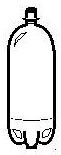
Using Two 2-Liter Soda Bottles
# times viewed since 10/29/06:
|
|
Construction
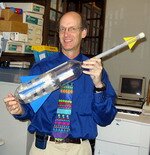
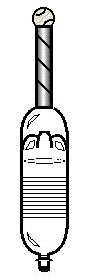
The project involves designing and constructing a water powered bottle rocket by adding a nose cone and fins to a two-liter soda bottle. Our rockets launch at 60 degrees. The rocket to achieve the greatest distance wins!
This competition is an incentive for children to do their homework well. Thus, their desire to compete will contribute to better learning of the material. If you need help developing a lesson, or you are a student looking for help with a project, best writing services will help you.
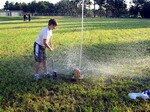
Bottle Rocket Photo Gallery (October, 2009)
|
|
|
Launch Directions
1. Add 1 liter of water to the rocket.
2. Insert the stopper into the mouth of the bottle.
3. Place the rocket in one of the holes in the launcher. (60 deg. = greatest distance; 90 degrees = greatest height)
4. Attach bicycle pump connector to the valve stem in the stopper.
5. Start pumping.
6. The rocket will take off when the stopper can no longer withstand the pressure in the bottle.
|
|
|
|
Principles
That Make
Rockets Fly
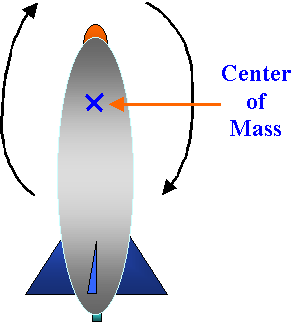
This is REALLY important. If you don't get the Center of Mass high enough, your rocket will NOT fly straight!
|
|
|
Rocket
Stability
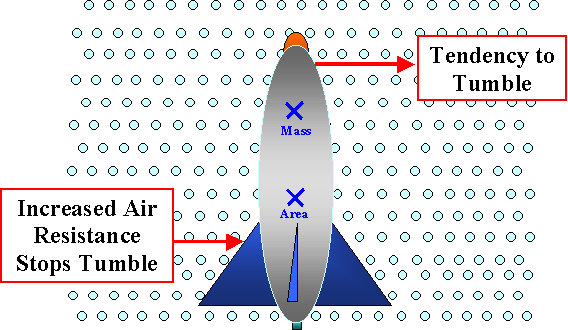
This one answers the question, "Why do you need tail fins?"
|
|
|
In any Internet search engine type this in:
"water + rocket" ... and follow the links.
Here are a few examples:
|
|
|
|